







Guest Post by the BetterHelp Editorial Team | Written in Partnership with the One Love Foundation
Most people grow up believing that conflict in a relationship is a warning sign. Raised voices, slammed doors, and the cold silence that follows an argument can feel like evidence that something is fundamentally broken. But therapists and relationship researchers have long understood something that everyday experience tends to obscure: conflict is not the enemy of a healthy relationship. How couples, friends, and family members navigate conflict is what actually matters.
The goal is not to eliminate conflict entirely, since that would require eliminating two distinct people. The goal is healthy communication. When handled with respect and skill, conflicts can deepen mutual understanding, clarify unspoken needs, and build the kind of trust that only comes from knowing someone will stay present even when things are hard. This guide, informed by therapeutic frameworks and the work being done by the One Love Foundation to end relationship abuse and create a world of healthier relationships, offers practical strategies for transforming conflict into connection.
Why Arguments Feel So Threatening
Before addressing how to disagree better, it helps to understand why conflict feels so dangerous in the first place. When a conflict escalates, the brain’s threat detection system, commonly referred to as the fight-or-flight response, activates in much the same way it would for a physical threat. Heart rate increases, the capacity for rational thinking narrows, and the instinct to defend or withdraw takes over. Psychologist John Gottman, whose decades of research on couples is foundational in relationship therapy, identified four communication patterns that consistently predict relationship breakdown: criticism, contempt, defensiveness, and stonewalling. He called them the “Four Horsemen.”
What these patterns share is that they shift the conversation from the issue at hand to an attack on the person. “You never listen to me” is not a complaint about a behavior. It is a verdict about a character. Once a conflict moves into that territory, the conversation is no longer about solving a problem. It becomes about surviving a perceived threat. Understanding this physiological and psychological dynamic is the first step toward interrupting it.
Reframing Conflict as Information
One of the most useful shifts a person can make is to treat conflict as valuable information rather than a disaster. When friction arises, it is almost always carrying information about unmet needs, misaligned expectations, or accumulated frustration. The argument about who forgot to pay the bill may actually be about feeling unsupported. The argument about how to spend the weekend may be about feeling like one person’s priorities are consistently sidelined.
Therapists trained in Emotionally Focused Therapy (EFT) work from the premise that beneath most surface conflicts are deeper attachment needs: the need to feel seen, valued, secure, and important to the people we love. When those needs go unaddressed, arguments tend to repeat themselves in slightly different forms. The couple who fight about dishes every week is rarely fighting about dishes. Approaching conflict with curiosity, asking what the conflict is really about, makes it possible to address the actual source of friction rather than just the presenting symptom.
The Mechanics of a Healthy Conflict
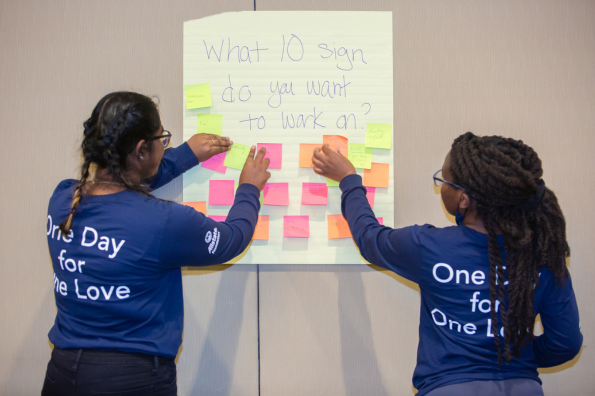
While conflict is normal, the way partners treat each other during disagreement is a powerful indicator of relationship health. According to the One Love Foundation’s 10 Signs of a Healthy Relationship, healthy partnerships are built on behaviors like:
- Respect: Listening to a partner’s perspective without belittling or dismissing them
- Honesty: Sharing feelings openly, even when the conversation is uncomfortable
- Taking responsibility: Being accountable for mistakes during conflict
- Independence: Allowing both partners space to cool down and regulate emotions
- Trust: Believing the other person is approaching the conversation in good faith
When conflict includes these elements, it becomes less about winning an argument and more about strengthening the relationship itself.
Healthy conflict is a learnable skill, not a personality trait. Research in communication and relationship science has identified several concrete practices that consistently improve conflict outcomes. These are not abstract principles. They are behaviors that can be practiced and refined over time.
Start with a softened opening. The way a conversation begins strongly predicts how it will end. Gottman’s research found that in 96% of cases, the outcome of a difficult conversation could be predicted from the first three minutes. A harsh startup, one that is critical or malicious, almost always escalates. A softened startup describes the situation, expresses a feeling, and states a need without assigning blame. Compare “You always do this and never think about how I feel” with “I’ve been feeling a little disconnected lately, and I’d love to talk about it when you have a moment.” The second version opens a door; the first one closes it.
Use “I” statements instead of “you” accusations. This is one of the most widely cited tools in relationship therapy, and it works because it shifts the focus from blame to experience. An “I” statement describes how a situation affects the speaker rather than cataloguing the faults of the listener. It is harder to argue with someone’s lived experience than with a characterization of their behavior.
Pause when flooded. Physiological flooding, the state of acute emotional overwhelm that can occur during conflict, makes productive conversation nearly impossible. The research is clear: when heart rate exceeds roughly 100 beats per minute during an argument, the brain’s capacity for nuanced thinking drops significantly. Taking a structured break of at least 20 minutes, not to stew but to genuinely calm the nervous system, and returning to the conversation tends to produce far better outcomes than pushing through at peak intensity.
Scripts to Try Right Now
Knowing what to say in the heat of a conflict can feel impossible. The following scripts, grounded in therapeutic best practices, are designed to be adapted to specific situations. They are starting points, and the language should feel natural rather than clinical.
To open a difficult conversation:
“There’s something I’ve been wanting to talk about, and I want to do it in a way where we both feel heard. Is now an okay time?”
“I’m not trying to make you the villain here. I just want to share how I’ve been experiencing something, and I’d love to hear your perspective too.”
To express a need without accusation:
“When [specific situation happens], I feel [emotion], because I need [underlying need]. Would you be open to talking about how we could handle it differently?”
To request a pause without abandoning the conversation:
“I can feel myself getting activated, and I don’t want to say something I’ll regret. Can we take 30 minutes and come back to this? I promise I’m not walking away from the conversation.”
To validate without necessarily agreeing:
“I hear that this has been really frustrating for you. That makes sense to me. I see it a little differently, and I’d like to share my perspective, but I want you to know I’m taking what you said seriously.”
To repair after a rupture:
“I said some things earlier that weren’t fair, and I want to own that. What I was really trying to say was [restate need or concern]. Can we try again?”
When to Seek Outside Support
Communication tools and relationship education can go a long way in helping people navigate conflict. Resources like One Love’s 10 Signs of Healthy and Unhealthy Relationships can help educate individuals on how to love better and approach conversations with honesty, trust, and respect.
In some cases, however, recurring or escalating conflict may benefit from professional therapeutic support. Arguments that never seem to resolve, escalating intensity, or dynamics that feel controlling or unsafe are all signals worth taking seriously. BetterHelp connects people with licensed therapists across a range of specialties, including relationship and communication issues, through a flexible online platform that removes many of the logistical barriers that have historically kept people from accessing care.
The platform’s network of more than 30,000 credentialed mental health professionals includes licensed marriage and family therapists, licensed clinical social workers, licensed professional counselors, and psychologists, many of whom specialize in relational dynamics, attachment, and communication. Sessions are available via video, phone, live chat, or asynchronous messaging, meaning people can engage with a therapist in whatever format fits their lives. Subscriptions are available starting at $65 per week, making professional support more financially accessible than traditional in-person therapy for many people.
Individual online therapy can help a person identify their own patterns in conflict, including the defensive reactions they default to, the emotional triggers that narrow their thinking, and the unspoken needs they have difficulty naming. Couples therapy, available through the BetterHelp partner platform Regain, offers a structured environment for partners to practice new communication skills with a professional guiding the process. Research published in the National Institutes of Health database has found that online therapy platforms can produce meaningful symptom reduction and improvements in well-being for users engaging consistently with the platform.
Online therapy is not appropriate for every situation. Individuals in crisis, those experiencing domestic violence, or people with acute psychiatric needs may require more intensive, in-person clinical support. Contacting a crisis line or seeking emergency services is the right step in those cases.
Not all conflict is constructive. One Love’s 10 Signs of an Unhealthy Relationship emphasize that certain patterns can signal unhealthy relationship dynamics. Repeated behaviors such as belittling, volatility, intensity, and deflecting responsibility may indicate deeper problems that go beyond normal disagreement. If arguments consistently involve intimidation, manipulation, or fear, the goal should not simply be better communication strategies; it may be important to evaluate whether the relationship itself is safe and healthy.
Conflict as a Path to Closeness
There is a counterintuitive truth that experienced therapists often share with clients: the couples and friends and family members who never argue are not always the healthiest. Sometimes the absence of conflict signals not harmony but avoidance, as it may feel like an easier route to take. Avoidance can keep the peace in the short term, but it tends to build resentment over time and prevents the kind of honest communication that allows relationships to grow and adapt.
Conflict, handled well, is an act of trust. It signals that a person believes the relationship can hold the weight of honesty and cares enough to work through difficulty rather than pretend it isn’t happening. The scripts and strategies in this guide are tools for practicing that kind of courage, oriented not toward winning arguments but toward staying in them long enough to understand each other better.
The One Love Foundation’s work to educate people about relationship health, alongside the broader mission of platforms like mental health therapy services, shares a common premise: that the skills required for healthy relationships are learnable. They are not innate to some people and absent in others. They can be studied, practiced, and improved. Most people were never formally taught how to argue well. That is not a personal failing. It is a gap, and gaps can be filled.
The next conflict that arises in a relationship does not have to follow the familiar script. With the right tools, it can become something different: a conversation that leaves both people feeling more understood than they did before it began.
About This Post: This guest blog was authored by the BetterHelp editorial and clinical team in collaboration with OneLove Foundation. The information provided is for general educational purposes and does not constitute clinical advice. If you are experiencing a mental health crisis or unsafe relationship dynamics, please contact a licensed professional or local emergency services.
Browse by Category





5 Things I Learned from Making an AI Friend
Key Takeaways on AI Partners from a One Love Employee The more I’ve heard about AI partners, the more confused,…

How to Build a Positive Relationship With Your Teen: Strategies for Parents and Caregivers
(Based on “Parent-Caregiver Worksheet: How do I build a positive…

Don’t Be on the Naughty List: Spotting Unhealthy Relationship Signs This Holiday Season
The holidays are meant for joy, connection, and celebration—whether it’s…

How to Have Healthy Holiday Conversations with Family (and Prep Your Partner)
The holidays are a time for family, good food, and—let's…

Finding Strength in Our Stories: Domestic Violence Awareness Month
⚠️ Trigger Warning: This blog includes content and language related…

